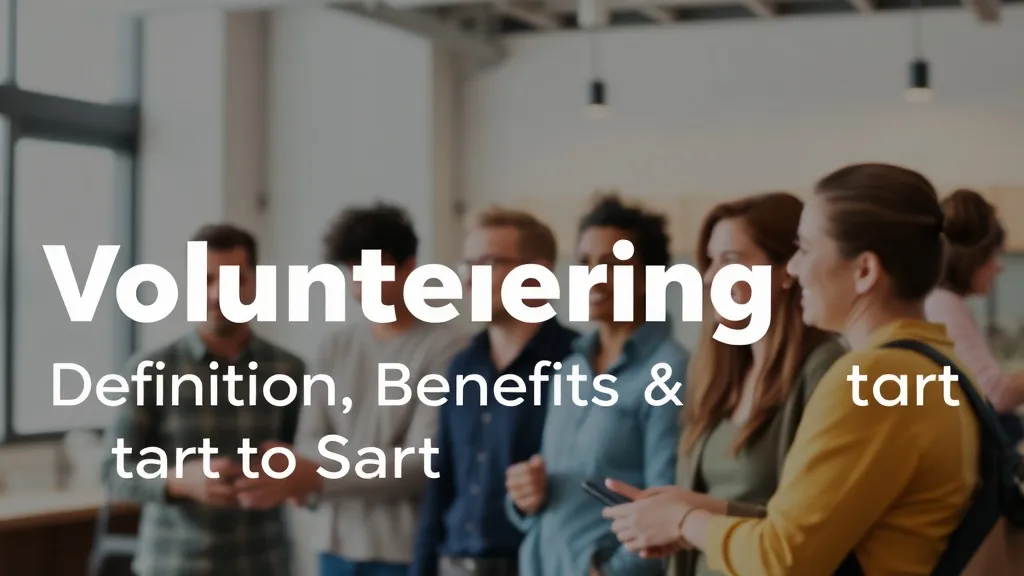
Volunteering: Definition, Benefits & How to Start
You’ve likely felt that urge to give back—whether it’s helping a neighbor or joining a community cleanup. Volunteering can transform your life and those around you. In fact, a surprising 862 million individuals aged 15+ engaged in volunteer activities globally as of 2022. That’s nearly one in nine people making an impact! Today you’ll discover exactly what volunteering means, explore its life-changing benefits, and learn simple, actionable steps to launch your own volunteer journey.
Ready to dive in? Let’s go.
Table of Contents
- What Is Volunteering?
- Why Volunteering Matters: Key Benefits
- How to Start Your Volunteering Journey
- Common Mistakes to Avoid
- Future Trends in Volunteering
- Frequently Asked Questions
- What is the difference between formal and informal volunteering?
- How much time should I commit?
- Can volunteering boost my career?
- Do I need special qualifications?
- Is virtual volunteering effective?
- Conclusion
What Is Volunteering?
Have you ever wondered why people donate their time without pay? Volunteering is all about offering services or skills for the good of others, without financial reward. It ranges from formal roles with nonprofits to informal acts—like tutoring a classmate or helping an elderly neighbor with groceries.
Simply put, volunteering is driven by goodwill. It can happen locally at a soup kitchen or globally through organizations such as Wikipedia describes it as a fundamental component of civil society.
Why Volunteering Matters: Key Benefits
Here’s the thing: giving your time doesn’t just help others. It helps you too.
Let me explain why volunteering can be a game-changer.
- Personal Growth: You learn new skills and boost your confidence.
- Social Connections: Meet like-minded people and expand your network.
- Community Impact: Address local needs, from food insecurity to tutoring.
- Career Benefits: Hands-on experience and resume-building opportunities.
- Wellness Boost: Studies link volunteering to reduced stress and better mental health.
“Volunteering is the ultimate exercise in democracy. You vote every day about the kind of community you want to live in.” — Author Unknown
Actionable Takeaway: Identify one cause you care about and list three skills you can offer. Then, research local groups that need exactly what you bring to the table.
How to Start Your Volunteering Journey
You might be wondering: where do I even begin? First, get clear on your interests and availability.
Ask yourself:
- What issues am I passionate about?
- How much time can I commit weekly or monthly?
- Do I prefer hands-on work, virtual projects, or event-based roles?
Once you’ve got answers, follow these steps:
- Research organizations: Check out local nonprofits, schools, or online platforms like America’s Service.
- Reach out: Send an email or make a phone call to express interest.
- Attend orientation: Many groups offer training—take advantage.
- Start small: Try short-term events or micro-volunteering tasks.
- Reflect & adjust: Evaluate what you enjoy and tweak your involvement.
Example: A college student tutored underprivileged kids for two hours weekly. Within three months, reading scores improved by 20%. Simple, yet powerful.
Actionable Takeaway: Draft a brief “volunteer resume”—list your skills, past experience, and availability. Keep it handy when you connect with organizations.
Common Mistakes to Avoid
Another pitfall? Not clarifying expectations. Ensure you and the organization align on roles, time commitments, and goals.
Finally, don’t shy away from asking for feedback. That’s how you grow and make an even bigger impact.
Future Trends in Volunteering
Interestingly enough, the volunteer landscape is evolving fast. Here’s what’s next:
- Informal Volunteering: More people help neighbors directly, especially in diverse communities.
- Virtual Volunteering: Digital skills projects and remote mentoring are on the rise.
- Purpose-Driven Workplaces: Companies offering paid volunteer days to retain Gen Z employees.
Stay ahead: learn mobile-friendly scheduling apps and look for skill-based volunteering roles.
Frequently Asked Questions
What is the difference between formal and informal volunteering?
Formal volunteering is organized through institutions or nonprofits, while informal volunteering happens spontaneously—like helping a friend move or teaching a neighbor to read.
How much time should I commit?
Even one hour a week counts. Start with a realistic commitment and increase as you feel comfortable.
Can volunteering boost my career?
Absolutely. Organizations value leadership, communication, and project management skills gained through volunteer work.
Do I need special qualifications?
Most roles welcome beginners. For specialized tasks, some training may be required—but it’s often provided.
Is virtual volunteering effective?
Yes. Virtual mentors, translators, and designers help nonprofits reach global communities without leaving home.
Conclusion
Volunteering is more than free labor—it’s a path to personal growth, stronger communities, and meaningful connections. You’ve learned the definition, uncovered key benefits, and discovered practical steps to get started. Now it’s your turn to act.
- Choose a cause you care about.
- Create a simple volunteer resume listing your skills and availability.
- Reach out to an organization and sign up for an orientation.
The bottom line is that volunteering offers real transformation—for you and your community. So why wait? Take that first step and experience the power of volunteering today.