English Study Switzerland 2025: Programs
You want to know: can you study in Switzerland in English? Believe it or not, English is the most popular foreign language here—44% of Swiss residents use it regularly (Le News, 2025). You’ll find an expanding range of English-taught bachelor’s, master’s, and PhD programs. In this guide, you’ll discover what’s on offer, language requirements, costs, student life tips, and post-graduation opportunities. Ready to map out your next steps? Let’s dive in.
Table of Contents
Why Study in English in Switzerland?
You might be wondering why English is gaining ground among German, French, Italian, and Romansh. With over half of new bachelor’s entrants having strong English skills (OECD 2025), universities are responding by offering more anglophone courses.
Here’s the thing: English programs open doors to global research networks, internships, and partnerships. They also help you blend into a multilingual campus where English acts as the bridge language. Imagine collaborating with peers from 100+ countries—no translation needed!
Real Example: A data science master’s student at ETH Zurich worked on a Swiss-wide health analytics project in English and published in an international journal. It boosted their résumé instantly.
“English programs attract a diverse student body, fostering intercultural exchange and cutting-edge research.” — Prof. Anna Müller, ETH Zurich
Actionable takeaway: Start your search by filtering for “English” on university portals. Bookmark programs that align with your career goals.
Types of English-Taught Programs
Switzerland offers degrees in four main categories:
- Bachelor’s Degrees: Limited but growing; often in business, hospitality, and life sciences.
- Master’s Degrees: The bulk of English offerings; wide-ranging fields from engineering to social sciences.
- Doctoral Programs (PhD): Nearly always available in English, especially in STEM and research-intensive disciplines.
- Short Courses & Certificates: Hybrid or online formats for working professionals.
Plus, private institutions (like IMD or Les Roches) often deliver entire degrees in English. Public universities may require one or two semesters of local language classes—but not always.
Language Requirements and Benefits
Hook: Wondering what tests and scores you actually need?
Context: Admissions committees need proof of proficiency to ensure you’ll keep pace with lectures and assignments.
Detailed Explanation: Most English-taught programs ask for one of these:
- TOEFL iBT: Minimum score 80–100
- IELTS Academic: Band 6.5–7.0
- Cambridge C1 Advanced: Grade B or higher
Some institutions accept Duolingo English Test too. And here’s a bonus: learning German, French, or Italian can land you part-time work and local friends.
“Among 15- to 64-year-olds, just over half rate their active English as good or very good.” — Le News (2025)
Actionable takeaway: Book your language test three months before the application deadline to allow retakes if needed.
Cost of Living and Tuition Fees
Hook: Switzerland isn’t cheap, but quality counts.
Context: You’ll need to budget for both tuition and daily expenses.
Detailed Explanation:
- Living Expenses: CHF 1,200–2,000/month (rent, food, transport).
- Public University Fees: CHF 500–1,500/semester for Swiss and EU/EEA students; CHF 1,000–3,000 for non-EU students.
- Private Institutions: CHF 10,000–40,000/year.
Actionable takeaway: Open a Swiss blocked account before arrival to prove financial means for your visa.
Application Process and Admission Tips
Hook: Feeling overwhelmed by documents and deadlines?
Context: Each university has its own timeline, but the steps are similar.
- Research programs and check prerequisites.
- Register on the university portal and upload transcripts.
- Submit language test scores, CV, and motivation letter.
- Request letters of recommendation (2–3).
- Apply for scholarships if eligible (e.g., Swiss Government Excellence Scholarships).
- Wait for the decision and, if accepted, secure accommodation.
Real Example: A finance master’s applicant improved her profile by taking an online micro-internship in fintech before applying—and got a scholarship.
Actionable takeaway: Start your application six months in advance. You’ll sleep better.
Student Life and Cultural Integration
Hook: What’s campus life really like?
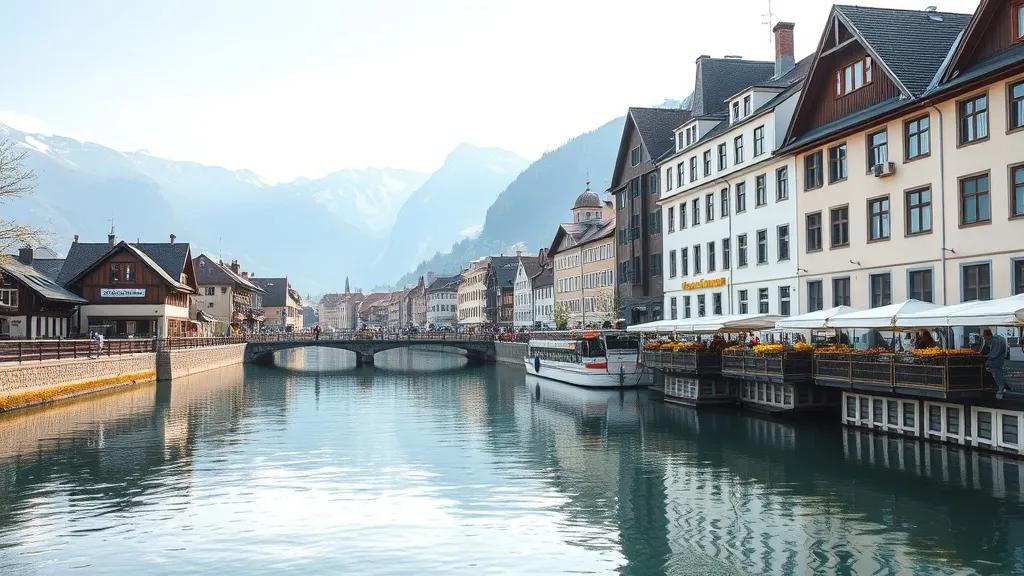
Context: Switzerland combines Alpine scenery with urban hubs—Zurich, Geneva, Lausanne—each with active student communities.
Detailed Explanation: Clubs range from robotics to mountaineering. Most events are held in English to accommodate internationals. And yes, you’ll find fondue nights (fun fact: it’s pronounced FOHN-deh).
Actionable takeaway: Join the international student office upon arrival. They organize welcome weeks and language tandems.
Work Opportunities Post-Graduation
Hook: Can you stay after graduation?
Context: Non-EU/EEA graduates get 6 months to find a job (Swiss Government).
Detailed Explanation: Part-time work (15 hours/week) is allowed during studies. Graduates often find roles in finance, pharmaceuticals, and tech. Pro tip: network at career fairs—many firms recruit on campus.
Actionable takeaway: Update your LinkedIn in English and Swiss national languages. Attend at least one virtual fair per semester.
FAQs
Q1: Can bachelor’s degrees be fully in English?
A: A handful—primarily in hospitality and international business at private schools.
Q2: Do English programs include local language classes?
A: Often optional, sometimes mandatory for certain degrees. Check program details.
Q3: What scholarships are available?
A: Look into Swiss Government Excellence Scholarships, university-specific awards, and EU grants for Erasmus+.
Q4: Is health insurance compulsory?
A: Yes. You must take Swiss health insurance or an accepted equivalent within three months of arrival.
Conclusion
Studying in English in Switzerland in 2025 offers an unbeatable blend of high-quality education, multicultural campus life, and strong post-graduation prospects. You’ve seen what programs are available, the language tests you’ll need, and how to manage costs and daily life. Now, here’s what to do next:
- Shortlist three programs and note their deadlines.
- Register for your language test and gather transcripts.
- Begin your application—and set calendar reminders.
The bottom line is this: can you study in Switzerland in English? Absolutely. Your journey starts now.