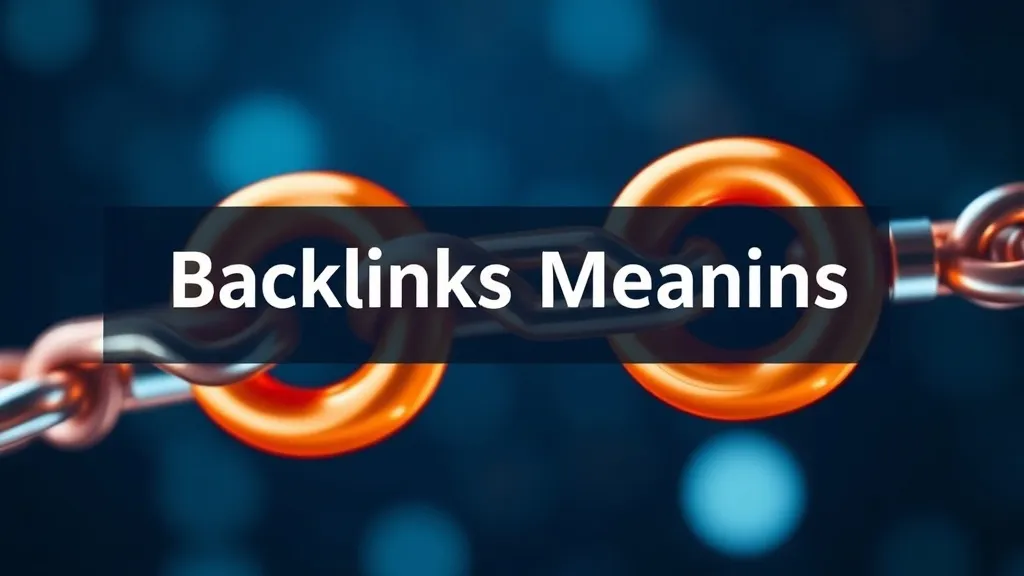
Backlinks Meaning 2025: SEO Definition
You know that feeling when you publish great content but it just doesn’t get noticed? You’re not alone. Understanding backlinks meaning is your ticket to better rankings and more traffic. Here’s the thing: pages with high-quality backlinks see a 150% rise in keyword rankings, according to a SearchAtlas study (SearchAtlas, 2025).
In this article, you’ll learn what backlinks are, why they matter in 2025, and how to earn them effectively. We’ll also cover common mistakes and future trends—so stick around. Ready? Let’s dive in.
Table of Contents
What Are Backlinks?
Hook: Ever wondered why some pages outrank giants with bigger budgets?
Context: Backlinks, sometimes called “inbound links,” act like votes of confidence for your site. They signal to search engines that other sites trust your content. That trust can boost your visibility and authority.
Detailed Explanation: Technically, a backlink is a hyperlink on Domain A that points to Domain B. Google’s original PageRank algorithm treated each backlink as a vote, but today quality and relevance matter more than sheer numbers.
Here’s a breakdown:
- Editorial backlinks: Earned naturally when someone references your work.
- Guest post backlinks: Given in exchange for content contributions.
- Directory backlinks: Listed in specialized directories (less powerful these days).
- User-generated backlinks: From comments or forum posts (often low quality).
“Backlinks act as votes of confidence for your pages, helping them rank higher and get indexed faster by Google.” – Search Engine Land
Example: A well-researched guide on sustainable fashion earned a backlink from a major news outlet, boosting its monthly visitors by 20%.
Actionable Takeaway: Audit your backlink profile using tools like Ahrefs or Moz. Look for high Domain Authority sites linking to you and assess relevance.
Why Backlinks Matter in 2025
Hook: You might be wondering why backlinks are still a big deal.
Context: In 2025, search engines weigh brand mentions, topic associations, and co-citations along with traditional links. AI-powered assessments value context more than ever.
Detailed Explanation: Beyond PageRank, algorithms now analyze semantic relevance. A link from a site in your niche carries more weight. For instance, a backlink from an industry blog about digital marketing is more powerful for an SEO article than one from a generic news site.
Data Point: Sites with semantically relevant backlinks report a 275% increase in search impressions (SearchAtlas, 2025).
Example: A tech startup’s blog got featured in a specialized AI research publication—and saw organic traffic jump by 14% in one month.
“High-quality backlinks from domains with strong Domain Power and semantically relevant anchor text produce measurable SEO improvements including a 150% rise in keyword rankings.” – SearchAtlas Research Team
Actionable Takeaway: Map out key topics in your industry and target websites that cover those exact themes.
How Backlinks Work & Types
Hook: Let me explain how different backlink types play unique roles.
Context: Not all backlinks are created equal. Search engines score each link on factors like anchor text, placement, and source authority.
Detailed Explanation: Anchor text relevance is crucial—too generic (“click here”) yields little value. Instead, use descriptive anchors that match your target keywords. Placement matters too: contextual links within content outperform footer or sidebar links.
- Editorial Links: Gold standard, earned through quality content.
- Guest Blogging: Still effective when done authentically.
- Resource Pages: Inclusion in a curated list or resource guide.
- Co-citations: Mentions of your brand alongside other trusted sources.
Example: An infographic shared by a university’s research department drove a contextual link that boosted the infographic’s host site in organic search.
Actionable Takeaway: Prioritize editorial and contextual links. Create link-worthy assets—like original research or engaging multimedia.
Best Practices for Earning High-Quality Backlinks
Hook: Want to know how pros secure premium links?
Context: Outreach isn’t about blasting mass emails. It’s relationship-building: offering value, understanding the audience, and communicating genuinely.
Detailed Explanation: Start by identifying influencers and site owners in your niche. Personalize your outreach—mention a recent article and explain why your content complements theirs. Offer to co-create or update existing posts. Track every email and follow up tactfully.
- Research target sites’ content gaps.
- Pitch unique, data-backed angles.
- Offer reciprocal value—like a guest post or expert quote.
- Maintain long-term relationships (holiday greetings count!).
“In 2025, backlinks still matter a lot, but we’re optimizing for something bigger than PageRank — brand building, topic associations, and co-citations in trusted content.” – Brian Dean, Backlinko
Example: A SaaS company sent personalized data insights to relevant bloggers, earning features in top industry roundups.
Actionable Takeaway: Build a mini-CRM using spreadsheets or tools like Skrapp SEO Outreach Guide to track contacts, pitches, and outcomes.
Common Mistakes & Advanced Tips
Hook: Are these link-building blunders holding you back?
Context: Even seasoned pros slip up—over-optimizing anchor text, ignoring relevance, or skimping on relationship-building.
Detailed Explanation: Avoid these pitfalls:
- Generic anchors—ditch “learn more” in favor of descriptive phrases.
- Link stuffing—more isn’t always better; focus on 1–2 high-value links per post.
- Neglecting follow-ups—persistence pays off.
- Ignoring nofollow vs. dofollow—balance both for a natural profile.
Advanced Tips:
- Leverage HARO queries to get quotes and backlinks from media sites.
- Use topic cluster models to earn contextual links across your site.
- Monitor brand mentions (even unlinked) and request backlinks.
Actionable Takeaway: Set monthly goals—pitch 10 targets, secure 2–3 backlinks. Tweak based on your success rate.
Future Trends in Link Building
Hook: What’s next for backlinks?
Context: AI and evolving search interfaces (like voice assistants) will reshape how link value is assessed.
Detailed Explanation: Expect algorithms to weigh co-citation networks and brand mentions more heavily. Links from podcasts or social platforms may gain traction. Additionally, interactive content (quizzes, calculators) can attract modern backlinks.
Insight: As search moves beyond blue links into AI-powered answers, having recognized domain authority will be crucial for content eligibility.
Actionable Takeaway: Experiment with multimedia assets—podcasts, videos, interactive tools—and promote them for links.
FAQ
- What is the best way to check backlink quality?
- Use tools like Ahrefs, SEMrush, or Moz to evaluate Domain Authority, spam score, and relevance.
- How many backlinks do I need to rank?
- Quality over quantity. A few high-authority links outperform hundreds of low-quality ones.
- Should I use follow or nofollow links?
- Mix both. Do-follow boosts SEO directly, while nofollow adds diversity and avoids suspicion.
- Can internal links replace backlinks?
- No. Internal links help site structure but don’t carry external authority.
Conclusion
In other words, mastering the backlinks meaning in 2025 means focusing on context, quality, and genuine connections. You’ve seen what backlinks are, why they matter, and how to earn them with smart outreach and content assets. Don’t forget to avoid common mistakes and keep an eye on AI-driven trends.
Your next steps:
- Audit your existing backlink profile—identify gaps and opportunities.
- Create one link-worthy asset (original research, infographic, or tool).
- Reach out to five niche-relevant sites with personalized pitches.
The bottom line is: consistent effort yields lasting authority. Keep building, iterating, and adapting. Your next high-quality backlink is closer than you think.