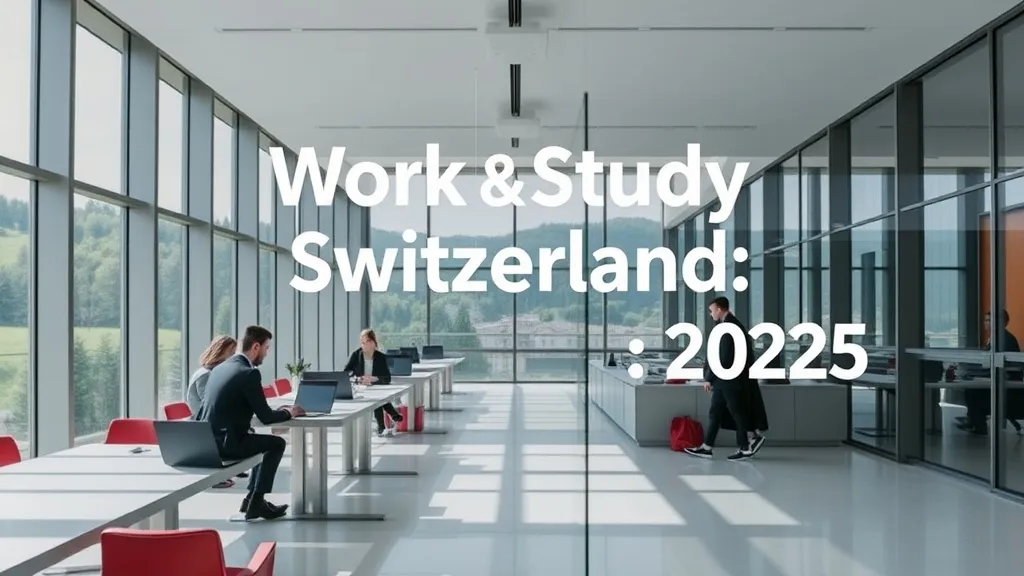
Work Study Switzerland 2025: Balance
You’ve heard that Switzerland is one of the best places to work and study in Switzerland—and you’re right. With employment climbing by 0.6% to 5.36 million in Q2 2025[1], there’s no shortage of opportunities. You might be wondering how to juggle lectures, part-time shifts, visa rules, and a social life. Well, you’re in the right spot.
Here’s what you’ll discover:
- Key benefits of combining studies with part-time work
- Visa permissions and permit essentials
- Time management hacks and job options
- Post-graduation pathways and training tips
Simple, practical, actionable. Let’s dive in.
Table of Contents
- Why Work and Study in Switzerland is a Winning Combination
- Navigating Visa and Work Permit Regulations
- Time Management Strategies for Student Employees
- Top Part-Time Jobs and Industries for Students
- Post-Graduation Work Options and Continuous Training
- FAQs
- What are the maximum work hours for international students?
- Can I switch from a student visa to a work permit?
- Which cities offer the best student job prospects?
- Is prior work experience required?
- How can I avoid burnout?
- Conclusion
Why Work and Study in Switzerland is a Winning Combination
Ever felt like education and earnings are worlds apart? Not here.
Switzerland’s economy is robust, with foreign workers growing by 2.3% to 1.87 million[1]. That means diverse employers—from tech startups to luxury hotels—are open to hiring students.
Imagine attending afternoon lectures at ETH Zurich and then serving guests at a lakeside café. Classes sharpen your mind; real-world tasks build soft skills and a network. Plus, earnings offset living costs in Zurich or Geneva (where rent can hit CHF 1,500–2,000). It’s an investment in both your resume and bank account.
“Work-related continuous training boosts earnings by around 3.4% and cuts unemployment risk by 2.1 percentage points.” — Winssolutions Study[2]
Actionable Takeaway: Start networking early. Visit career fairs at your university and set up informational interviews by month two of your term.
Navigating Visa and Work Permit Regulations
Got a student visa? Good—it usually comes with work rights.
EU/EFTA nationals may work without extra permits. Non-EU students can work up to 15 hours per week during semesters and full-time in vacations.[4] Make sure your permit explicitly states this. Failure to comply can lead to fines—or worse—revoked visa status.
Case Study: A Nigerian graduate student in Lausanne balanced 12 weekly hours at a research lab. She scanned her permit details online, confirming no extra paperwork was needed beyond a simple permit notification to local authorities.
“Students from non-EU countries must register any employer with the cantonal migration office.” — Swiss State Secretariat for Migration
Actionable Takeaway: Before you accept a job, verify work-hour limits and registration steps on the official government portal or via Switzerland-student-work-permit-2025.
Time Management Strategies for Student Employees
How does one balance morning lectures, afternoon lab work, evening shifts, and still catch that weekend hike? It’s all about planning.
Use the Eisenhower Matrix: categorize tasks by urgency and importance. Block study sessions in your calendar. Slot fixed work shifts during lower cognitive times—afternoons or late evenings—and protect high-focus slots for assignments and revisions.
- Set weekly goals: academic milestones and work targets.
- Time-block 90-minute study sprints followed by 15-minute breaks.
- Use apps like Trello or Todoist to visualize deadlines.
In other words, treat your study–work combo like a project with milestones.
Common Mistake: Overbooking your calendar. Less is often more—don’t fill every free hour or burnout is inevitable.
Actionable Takeaway: Review your schedule each Sunday evening. Adjust tasks and rest periods to maintain a realistic workload.
Top Part-Time Jobs and Industries for Students
Curious where to apply? Switzerland’s job market caters to students.
Hospitality and retail are classic picks: hotels, ski resorts, boutique shops. Media and tech firms often seek multilingual interns. And universities themselves hire research or teaching assistants.
- Hospitality (cafés, hotels, resort guides)
- Retail (luxury boutiques, grocery chains)
- Tech startups (UX testing, junior dev roles)
- Academic roles (lab assistant, peer tutoring)
Real Example: In Geneva, a hospitality student worked at Hotel Rotary, earning CHF 25/hour while practicing English, French, and customer service routines.
Expert Insight: “Gender doesn’t dictate profession choice as much as personal interest and working conditions,” notes SwissInfo[5].
Actionable Takeaway: Apply early—many positions fill a month before term starts. Tailor your CV to highlight bilingual skills and any related coursework.
Post-Graduation Work Options and Continuous Training
Graduation is near. What’s next?
You have up to six months to search for a job after finishing your degree[4]. During that time, you can convert your student permit to an L or B permit, depending on the job offer. If you land a role related to your studies, your transition is smoother.
Continuous professional training is a game-changer. Workshops on advanced data analysis or language certifications—invest 1–2 days per month and watch your employability soar. Low-income workers see a 3.4% earnings boost from such training[2].
Actionable Takeaway: Set aside 5% of your monthly income for targeted training courses. Even a single weekend workshop can unlock new career paths.
FAQs
What are the maximum work hours for international students?
Non-EU/EFTA students may work 15 hours per week during the semester and full-time during holidays.[4]
Can I switch from a student visa to a work permit?
Yes—if you secure a job related to your degree, you can apply for a B permit within your six-month post-study window.
Which cities offer the best student job prospects?
Zurich and Geneva top the list for finance and tech roles. Lausanne is strong in research; Bern has steady hospitality openings.
Is prior work experience required?
Not always. Many student roles are entry-level. Highlight transferable skills, languages, and any volunteer work.
How can I avoid burnout?
Prioritize rest: schedule downtime, maintain healthy sleep, and use campus wellness resources.
Conclusion
Balancing work and study in Switzerland is more than possible—it’s a strategic career move. We’ve covered visa rules, top industries, time management, and post-graduation pathways. You know where to look, when to apply, and how to protect your well-being.
Next steps:
- Review your student permit and confirm work rights.
- Draft a weekly schedule using the Eisenhower Matrix.
- Enroll in one continuous training workshop this month.
Go forth with confidence—and make the most of your Swiss adventure. Your success story starts now, as you learn to pragmatically work and study in Switzerland.