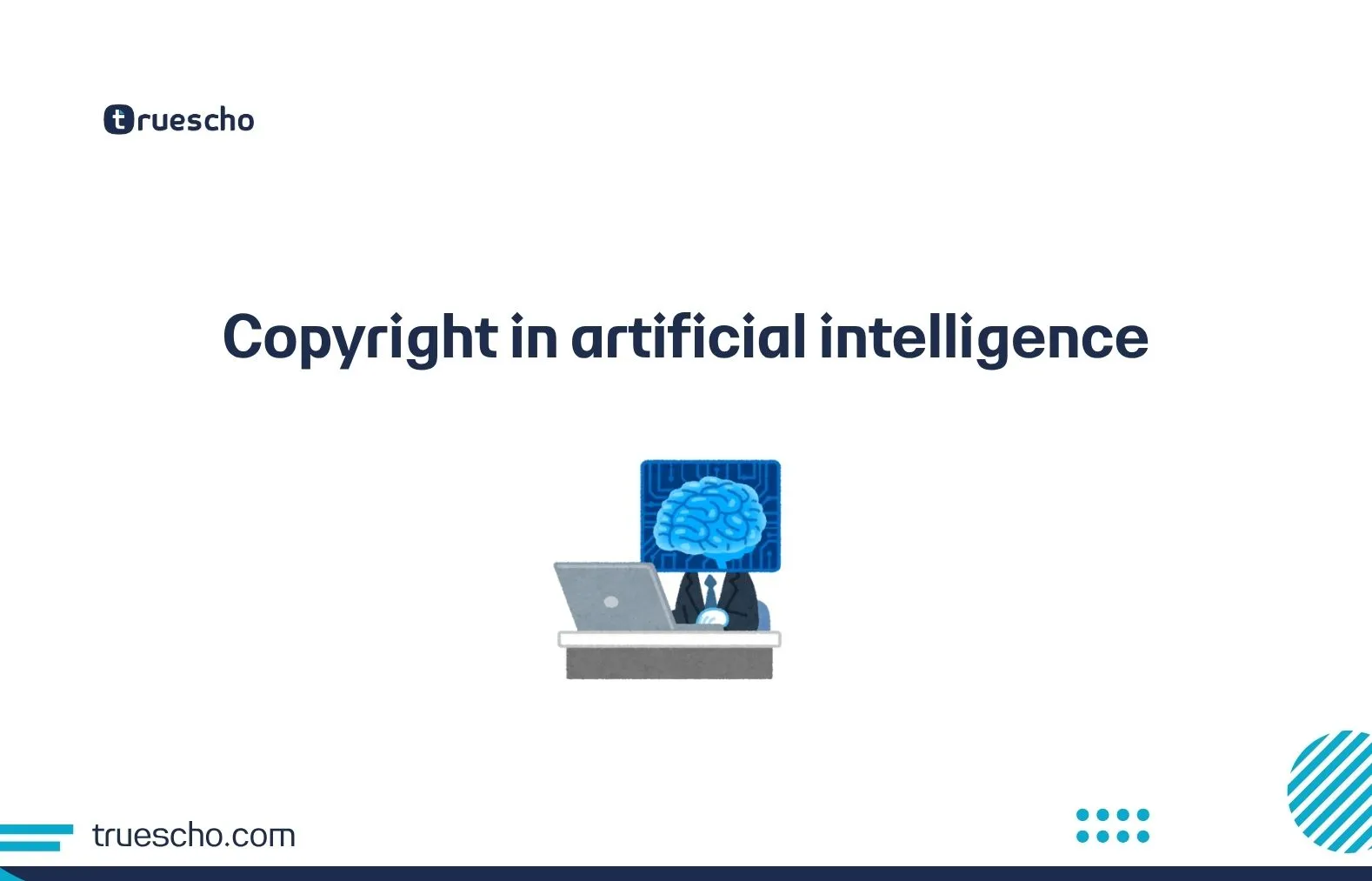
Copyright in artificial intelligence
Table of Contents
- Copyright in artificial intelligence Overview Intelligence
- In-Depth Analysis of the Headnotes Issue
- Legal Perspectives and Expert Commentary
- Implications for the AI Industry and Copyright Law
- Market and Commercial Impacts
- The Future of AI Copyright and Legal Precedents
- Conclusion: Reflection on What This Means for IP Law
Copyright in artificial intelligence Overview Intelligence
Last week, a U.S. federal judge granted a summary judgment in favor of tech conglomerate Thomson Reuters, concluding that Ross Intelligence’s use of Reuters’ content to train its AI legal research platform infringed on the company’s intellectual property. The decision stemmed from a dispute over the usage of “headnotes” – concise summaries of legal decisions traditionally provided by Westlaw, Thomson Reuters’ esteemed legal research service.
Thomson Reuters contended that Ross Intelligence had repackaged and repurposed these headnotes without recontextualizing the material enough to qualify as a transformative use. The ruling has been hailed by some as a significant victory for IP rights, and it raises pressing questions about how far AI companies can go in using copyrighted materials.
For further details on the judicial reasoning, refer to the detailed analysis available on the reputable legal resource, JD Supra.
Read also:
In-Depth Analysis of the Headnotes Issue
At the heart of the case was the use of headnotes – summaries that encapsulate the crux of legal decisions. Ross Intelligence was accused of using headnotes originating from Westlaw to train its AI platform, which markets itself as a tool for analyzing legal documents and performing query-based searches across court filings.
Ross Intelligence defended the practice by arguing that its use of the copyrighted material was transformative because it repurposed the headnotes for a distinct legal research function. However, in the view of Judge Stephanos Bibas, the transformation was insufficient. According to the judge, the company’s approach merely repackaged the material rather than providing added commentary, new analysis, or context that would qualify the use as transformative.
The decision emphasizes that when an AI platform directly replicates the core material of a legal research service, it undermines any claim of transformative use. The judge’s opinion also pointed out the commercial motivations behind Ross Intelligence’s strategy. Specifically, the company intended to profit by developing a service that directly competes with the original intellectual property owner, Thomson Reuters.
This ruling, which offers critical insight into what-the-us-first-major-ai-copyright-ruling-might-mean-for-ip-law debates, calls into question the permissibility of using copyrighted training data without sufficient innovation or commentary.
Legal Perspectives and Expert Commentary
Several legal experts have weighed in on the implications of this ruling. Shubha Ghosh, a professor at Syracuse University specializing in intellectual property law, hailed the decision as a “strong victory” for Thomson Reuters. As noted by Ghosh, the summary judgment in favor of Thomson Reuters is a clear indicator that merely using copyrighted material as training data does not automatically constitute fair use.
“The trial will proceed, [but] Thomson Reuters was awarded a summary judgment, a victory at this stage of the litigation,” Ghosh explained. “The judge also affirmed that Ross wasn’t entitled to summary judgment on its defenses, such as fair use and merger. As a consequence, the case continues to trial with a strong victory for Thomson Reuters.”
Randy McCarthy, a U.S. patent attorney at Hall Estill, commented on the potential broader implications of the ruling. McCarthy noted that the judge’s focus on the “impacts upon the market for the original work” could pave the way for future cases involving AI and copyright disputes. However, he also cautioned that this decision may be subject to overturn on appeal, making it only one battle in a longer legal confrontation over AI training data.
Another legal expert, Mark Lezama, a litigation partner at Knobbe Martens with an emphasis on patent disputes, believes that the judge’s reasoning might extend to other forms of AI, including generative AI. Lezama highlights that, while the case centered on the repackaging of headnotes, the underlying principle could be applied to a broader range of situations where copyrighted content is used to train AI systems. This observation is crucial when considering the implications for what-the-us-first-major-ai-copyright-ruling-might-mean-for-ip-law in the context of emerging technologies.
These expert opinions reinforce the idea that companies relying on large-scale data scraping must tread carefully. Without significant transformation or recontextualization, using copyrighted material to train AI may be legally tenuous.
Read also:
Implications for the AI Industry and Copyright Law
The decision in the Thomson Reuters versus Ross Intelligence case is just the beginning in a series of legal battles over the use of copyrighted material in AI training. With numerous copyright-related AI lawsuits pending in U.S. courts, this ruling is a critical datapoint in shaping future policies and legal standards.
The ruling’s primary takeaway is a reaffirmation of the principles behind copyright law. The court’s reasoning clarified that even if an AI system merely “replicates” or slightly repurposes copyrighted works, that practice may not be shielded by fair use. This is particularly significant for the AI sector, where companies typically rely on vast repositories of data to enhance model performance.
Moreover, the judge drew a meaningful distinction between two categories of AI:
- Non-generative artificial intelligence: The type used by Ross Intelligence, which retrieves existing judicial opinions without generating new content based on the input data.
- Generative artificial intelligence: Systems, like those developed by some leading companies, that can produce new text, images, or music using massive datasets culled from public sources. For more on fair use principles, refer to the official guidelines provided by the Harvard Office of the General Counsel at Harvard OGC.
For copyright holders, the ruling is a clear signal to protect their content vigorously. Publishers and other rights holders are encouraged to monitor how their materials are used in AI training, as this decision may well influence subsequent judicial opinions on what-the-us-first-major-ai-copyright-ruling-might-mean-for-ip-law.
At the same time, many AI developers claim that their practices qualify as fair use by arguing that their models represent transformative works. However, the ruling makes it evident that merely repackaging existing content – without sufficient added analysis or creative input – might not be enough to sidestep infringement claims.
Market and Commercial Impacts
The financial stakes in this legal tussle are significant. Ross Intelligence’s decision to base its business model on repurposing headnotes highlights the lucrative potential of AI-powered legal research. However, the summary judgment indicates that there are limits to one’s ability to compete with established services like Thomson Reuters’ Westlaw.
Here are some important market and commercial considerations drawn from the case:
- Direct Competition: The court found that Ross Intelligence’s platform directly competed with Westlaw. This direct competition was a central factor in the ruling because it demonstrated that the startup was not merely using the headnotes for research but was leveraging the data to capture market share.
- Lack of Transformation: Despite claims to the contrary, the startup’s utilization of the headnotes did not result in new meaning or purpose. Instead, the service replicated the core benefits provided by Westlaw, diminishing any argument for a creative transformation that might justify the use.
- Commercial Motivation: The judge noted that Ross Intelligence’s primary goal was to monetize its service, a factor which further undermined its fair use defense. Commercial motives, when paired with the replication of copyrighted content, often tip the scales in favor of the rights holder.
As the controversy continues to unfold, stakeholders in the legal tech and AI sectors must remain vigilant. The commercial risks are substantial, and companies looking to enter this space must carefully evaluate their data sourcing strategies.
Read also:
Trump fires hundreds of air traffic staff

The Future of AI Copyright and Legal Precedents
While the current ruling is a pivotal moment, it is important to recognize that this is only one battle in a larger, ongoing war over what-the-us-first-major-ai-copyright-ruling-might-mean-for-ip-law. With over a dozen similar lawsuits continuously being reviewed in various courts, the legal interpretations regarding AI training data and copyright will likely evolve over the next few years.
Companies developing generative artificial intelligence systems continue to argue that their methods are supported by fair use doctrines because they rely on publicly available content. Nonetheless, as evidenced by the Thomson Reuters decision, the courts may draw a clear line when an AI system simply regurgitates or slightly modifies existing content.
To adapt to this changing climate, industry experts recommend the following tips for companies involved in AI development:
- Thoroughly Review Copyright Policies: Ensure that your data sourcing practices align with current copyright laws and scrutinize the potential for infringement claims.
- Enhance Data Transformation: Invest in developing methods that not only utilize existing data but also transform it with substantial creative input, thereby strengthening any fair use defense.
- Consult Legal Experts: Given the rapidly evolving judiciary landscape, staying updated with legal interpretations is crucial. Regular consultations with intellectual property attorneys can help mitigate legal risks.
- Explore Licensing Opportunities: When possible, negotiate licensing agreements with content owners to secure the right to use copyrighted material for AI training.
These recommendations are designed to help AI developers navigate the ambiguous territory of copyright law while minimizing exposure to litigation. Ultimately, how courts define “transformative use” and fair use in the context of AI will be determined on a case-by-case basis.
Conclusion: Reflection on What This Means for IP Law
The recent summary judgment in the Ross artificial intelligence case is a landmark moment, offering significant insights into what-the-us-first-major-ai-copyright-ruling-might-mean-for-ip-law. It sends a strong message that repurposing copyrighted content—especially when it competes directly with the original material—will not be easily defended as fair use.
As the legal battle over artificial intelligence and copyright continues, companies across the tech landscape are advised to reassess their data usage strategies. This decision not only reinforces the need for innovative transformations of copyrighted works but also serves as a cautionary tale for those seeking to leverage existing intellectual property without adequate recontextualization.
The evolving discourse around artificial intelligence copyright law promises to shape future legal precedents and industry practices alike. It remains to be seen how subsequent rulings may redefine boundaries and what-the-us-first-major-ai-copyright-ruling-might-mean-for-ip-law in other contexts.
Staying informed and proactive is essential for both artificial intelligence developers and rights holders. The balance between fostering innovation and protecting intellectual property is delicate—and each decision moves us closer to a clearer legal framework.
Read also: