IELTS Scores Explained: What They Mean
You’ve spent hours practicing, crunched through mock tests, and eagerly waited for your results—now you’re staring at the numbers. IELTS scores can feel like a secret code, right? Well, you’re not alone. According to the IELTS Official report, only 30% of test takers score above band 7.0! (Surprising, isn’t it?)
Here’s the thing: understanding your IELTS scores from 0 to 9 bands isn’t just about bragging rights. It’s about mapping out your next steps—be it university admission, professional licensing, or a visa application. You might feel overwhelmed by decimals like 6.25 or 5.75, but let me explain why those half-bands can make or break your plans.
In this comprehensive guide, you’ll learn exactly how those bands are calculated, what each score truly represents, and how to apply your results in real-world scenarios. Expect a clear breakdown of the 9-band scale, examples of score calculation (yes, rounding rules too), and expert insights to keep you on track. Plus, real-life tips to boost your band and warning signs to avoid common pitfalls. Ready to demystify your test outcome and set a clear path forward? Let’s dive in.
Table of Contents
What Are IELTS Scores?
Ever wondered why IELTS uses bands instead of percentages? It’s simpler than you think. Bands range from 0 (no attempt) to 9 (expert user), with half-point increments in between. Each reflects a specific level of English proficiency across listening, reading, writing, and speaking.
Imagine a staircase: each step (or band) brings you closer to fluent communication. Institutions, employers, and immigration authorities rely on these bands to gauge your readiness. After all, the last thing they want is a graduate who can’t follow lectures or a professional who can’t write emails clearly.
- Listening, Reading, Writing, Speaking: Each section is scored 0–9
- Overall band: Average of four section scores, rounded to the nearest 0.5
- Score validity: 2 years from test date
“The IELTS 9-band scoring system is designed to provide a clear and consistent measure of English proficiency, helping candidates and institutions make informed decisions.” — IELTS Official Representative
Read also: IELTS Questions Bank: Practice Database
How IELTS Scores Are Calculated
Have you ever done a tricky math puzzle? Calculating your IELTS overall band score is almost as satisfying.
First, your raw scores in each section are converted to the 9-band scale. Then the four band scores are added up and divided by four. If the result is a .25 or .75, it’s rounded up or down to the nearest half band (for example, 6.25 becomes 6.5). Simple enough?
- Convert raw marks to band scores
- Add Listening + Reading + Writing + Speaking
- Divide by 4
- Round to nearest 0.5 (or whole) band
Listening 6.5 + Reading 6.5 + Writing 5.0 + Speaking 7.0 = 25.0
25.0 ÷ 4 = 6.25 → Rounded to 6.5 overall band
Common Mistake: Focusing on a single section score instead of the overall band. Remember, your final result hinges on all four.
IELTS Band Descriptors Explained
What’s the real difference between a band 6 and a band 7? You might be curious.
Band descriptors offer detailed notes on what you can do at each level. Here’s a snapshot:
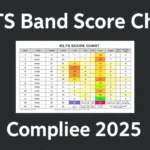
| Band | Description |
|---|---|
| 9 | Expert user |
| 8 | Very good user |
| 7 | Good user |
| 6 | Competent user |
| 5 | Modest user |
| 4 | Limited user |
| 3 | Extremely limited user |
| 2 | Intermittent user |
| 1 | Non-user |
In other words, each half-band marks a tangible jump in ability. For example, a band 7 writer can craft clear, well-structured essays, while a band 6 writer may struggle with complex ideas.
“Understanding your IELTS band score is crucial not just for test preparation but for setting realistic goals aligned with your academic or professional aspirations.” — Language Assessment Specialist
Actionable Takeaway: Download the full band descriptors from IELTS.org and compare them to your practice essays.
Applying Your IELTS Score
Universities, immigration services, and employers often set minimum scores. For example:
- University undergraduate programs: 6.0–7.0 overall
- Postgraduate studies: 6.5–7.5 overall
- UK student visa: 4.0–7.0 depending on course level
- Professional registration (nursing, accounting): 7.0 or higher
It pays to verify requirements early. Missing a band by 0.5 could delay enrollment or visa approval.
Real Example: A student secured admission to a UK Master’s program after boosting their writing from 6.0 to 6.5—meeting the exact requirement.
Read also: IELTS Writing Task 2 Samples: Band 7-9 Essays
Common Mistakes to Avoid
It’s tempting to skim tips online and skip fundamentals. Don’t!
- Underestimating the speaking section—practice with real partners.
- Ignoring time management—simulate test conditions.
- Overloading on vocabulary—clarity trumps complexity.
- Neglecting punctuation in writing—it counts.
Actionable Takeaway: Set weekly goals—like perfecting a Task 1 letter under 20 minutes.
Advanced Tips for Boosting Your Band
Ready to level up? Consider these expert strategies.
First, integrate English into daily life. Podcasts, news articles, and shows aren’t just entertainment—they’re study aids.
Second, record and review your speaking practice. Listening back identifies filler words and pronunciation issues.
Third, use online platforms like British Council for free resources and sample tests.
- Shadow native speakers to improve rhythm.
- Use a variety of reading materials: journals, blogs, manuals.
- Implement the Pomodoro Technique for focused writing practice.
Summary:
- IELTS scores range from 0 to 9 in 0.5 increments.
- Overall band is the average of four sections, rounded.
- Different bands reflect clear proficiency levels.
- Use scores for admission, immigration, and work.
FAQ
- What is a good IELTS score?
- It depends on your goal: 6.5–7.5 is considered strong for most academic programs.
- How long are IELTS scores valid?
- Scores are valid for 2 years from your test date.
- Can I combine scores from two test dates?
- No. Institutions require a single test report form with all bands.
- How do universities use IELTS scores?
- Often as a baseline for admission; some weigh writing and speaking more heavily.
- Is there an IELTS score calculator for 2025?
- You can find updated tools on ielts band scores explained pages.
Conclusion
Understanding your IELTS scores transforms uncertainty into a clear action plan. You’ve learned what the 0–9 bands mean, how your total score is calculated, and why each band descriptor matters. Plus, you’ve got proven tips to boost your performance and avoid common pitfalls.
Your next steps:
- Check target institutions or visa requirements for specific band thresholds.
- Download and study official band descriptors to align your practice.
- Set up a mock test schedule and use how to prepare for IELTS strategies.
Armed with this knowledge, you’re ready to aim high. Here’s to your best IELTS result yet!