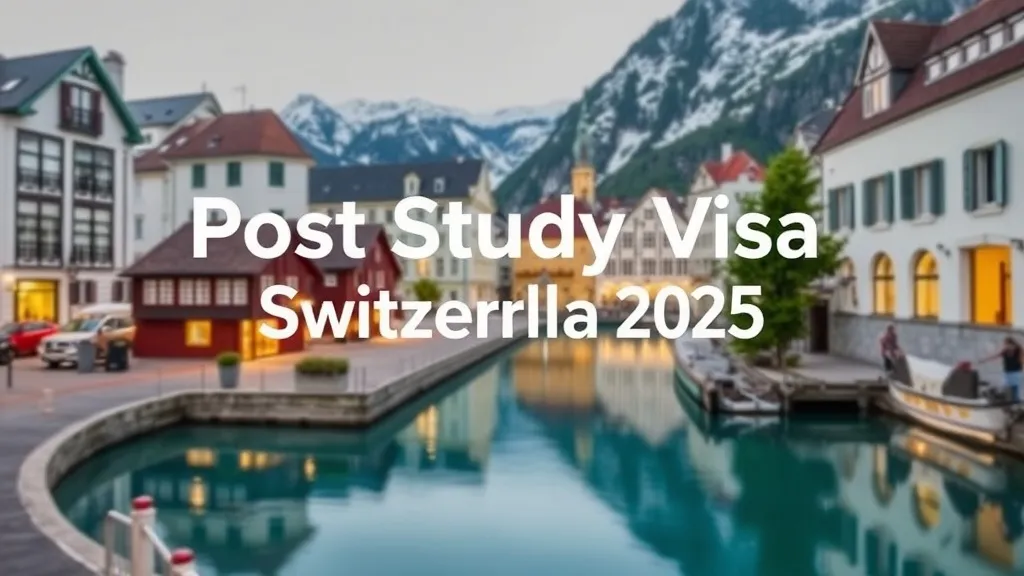
Post Study Visa Switzerland 2025: Work Rights
Everyone knows that finishing your Swiss degree is just the beginning of an exciting journey. You’re eager to stay on and gain real-world experience—who wouldn’t be? Navigating a post study visa in Switzerland might feel like a maze, but you’re in the right spot. Here, you’ll learn how to secure your work permit, understand your rights on the job, and even chart a path toward permanent residency. We’ll cover eligibility, application steps, timelines, common traps, plus insider tips on beating the six-month job-hunt clock.
It works.
Table of Contents
Overview of the Post Study Visa Process
Here’s the thing: Switzerland treats you like a skilled worker, not just a graduate. This matters because you’ll switch from a student permit to a B Residence Permit once you land a job offer.
Simply put, you have six months after graduation to find suitable employment. During that window, your student permit stays valid—but you must apply for a work permit before that grace period ends. Miss it, and you might have to leave the country (and no one wants that).
“The bottom line is that Swiss authorities focus on matching skills with labor market needs. Tech, finance and healthcare grads are in high demand,” explains immigration lawyer Anna Müller of Swiss Legal Advisors.
- Who needs it? Graduates with a Swiss degree.
- Why it matters? Keeps you legally employed.
- When to apply? Within six months of degree conferral.
Eligibility and Application Requirements
You might be wondering: what qualifies me for a post study work permit? Let me explain.
First, you must have completed a bachelor’s, master’s or doctoral degree at a recognized Swiss institution. Secondly, you need either a binding job offer or proof of ongoing interviews in a field related to your studies.
Here’s why each element matters:
- Recognized Diploma: Swiss authorities verify that your degree meets local standards.
- Employment Offer: Confirms you fulfill labor market needs.
- Language Level: Some cantons require basic proficiency in German, French or Italian.
(Yes, language tests can feel tedious—but they’re usually basic A2–B1 level.)
Citations:
Work Rights and Permit Types After Graduation
Did you know you can still work part-time during the six-month search period? It’s true.
Under your student permit (L Permit), you can work up to 15 hours per week during term and full-time during holidays once you’ve studied six months. But after graduation, your L Permit loses that work clause—unless you convert it.
When you convert, you generally receive a B Permit valid for 12 months and tied to your specific job. Key differences:
- L Permit: Student, part-time work only
- B Permit: Full-time work, renewable yearly
- C Permit: Permanent residency after 10 years (5 for some nationals)
“Switching smoothly prevents any gap in authorization—always plan ahead,” advises global mobility expert Dr. Sandra Lin at Zurich Mobility.
Step-by-Step: From Student Visa to Work Permit
You’ve got a job offer—now what? Follow these steps.
- Collect documents: diploma, employment contract, proof of address.
- Fill out the application on the cantonal migration portal.
- Submit biometric data at your local [State Secretariat for Migration] office.
- Wait 6–8 weeks for processing.
- Pick up your new B Permit in person.
Sounds straightforward? It mostly is, provided you’ve got all papers in order.
You might be wondering: can my family reunify? Yes—spouses and children can apply for a G Permit once your B Permit is approved.
For more on that, see our guide on family reunification after study visa Switzerland.
Common Pitfalls to Avoid
Relying on generic templates.
Underestimating language requirements.
Ignoring the six-month deadline.
Missing your appointment slot at the cantonal office.
Future Trends and Pathway to Permanent Residency
Interestingly enough, Switzerland is streamlining permits for tech, finance and healthcare grads in 2025. If you’ve been eyeing a long-term stay, here’s what to watch:
- Renew your B Permit annually—up to 10 years.
- Demonstrate integration: language test, community involvement.
- Apply for C Permit: 5 years for Nordic, EU/EFTA nationals; 10 years for others.
Simply put, consistent employment and social ties get you there faster.
FAQ
- What is a post study visa in Switzerland?
- It’s the process of converting your student L Permit into a work-based B Permit after graduation.
- How long can I stay after graduation?
- Your student permit grants a six-month search period, extendable only if linked to a job offer.
- Can my family join me?
- Yes—spouses and minor children can apply for reunification once your B Permit is granted.
- What documents do I need?
- Diploma, employment contract, proof of residence, valid passport, passport photo.
- When should I apply?
- As soon as you accept a job, but before the six months are up.
Conclusion
Switching from a student visa to a post study work permit in Switzerland may sound complex, but with proper planning you’ll breeze through. Key takeaways:
- Start your job search early (ideally two months before graduation).
- Submit a complete application—no missing signatures.
- Track deadlines: six-month search window is crucial.
Next steps: line up interviews, polish your language skills, and gather all your documents. Remember, the post study visa in Switzerland opens doors to a thriving career and eventual permanent residency. Your Swiss adventure is just beginning—go make it count!